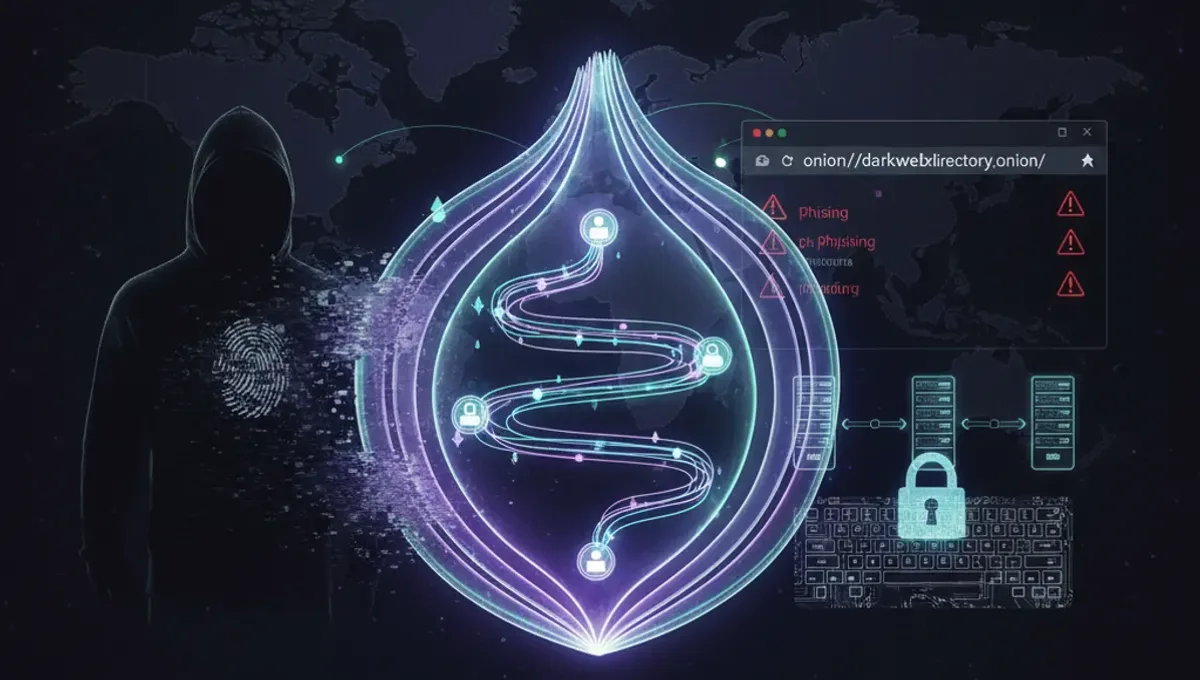
What Is the Onion Dark Web
The onion dark web consists of websites accessible only through the Tor browser, using .onion domain names instead of standard .com or .org extensions. These addresses are generated through a cryptographic process that creates a unique identifier for each hidden service. The term 'onion' references the layered encryption protecting traffic, where each layer removes one level of encryption as data passes through Tor nodes. Unlike the surface web, onion dark web sites don't appear in search engines and require specific URLs to access. The infrastructure was originally developed for privacy-focused communication and remains used by journalists, activists, and privacy advocates worldwide.
How Onion Dark Web Addresses Work
Onion dark web addresses are 16 or 56-character strings followed by .onion, generated through public-key cryptography. These addresses serve as both the location and identifier for hidden services on the Tor network. When you enter an onion dark web address into Tor Browser, your connection routes through multiple Tor nodes, with each layer decrypting one level of the address information. This process obscures your IP address and the site's server location. The address itself contains no information about the site's content or purpose, making it impossible to determine legitimacy from the URL alone. Legitimate onion dark web sites often publish their addresses on multiple platforms to prevent users from accessing spoofed versions.
Accessing Onion Dark Web Sites Safely
Safe dark web access requires the official Tor Browser, available from the Tor Project's website. Download only from legitimate sources to avoid compromised versions. Before accessing any onion dark web address, disable JavaScript in Tor Browser settings to prevent script-based attacks. Use a dedicated device or virtual machine when possible, and keep your operating system fully updated. Never maximize your browser window, as this can reveal your screen resolution to websites. Disable plugins and extensions that might leak your identity. Connect through a VPN before launching Tor for additional privacy layers, though this adds complexity. Never open files downloaded from onion dark web sites until you've scanned them with antivirus software.
Identifying Legitimate Onion Dark Web Services
Legitimate onion dark web sites typically display consistent branding, clear communication about their purpose, and established reputation within communities. Many publish their onion dark web address on multiple platforms including social media and forums to verify authenticity. Look for sites that explain their security practices and update their services regularly. Legitimate services often have associated social media accounts or discussion threads where users share experiences. Check whether the site uses HTTPS encryption in addition to Tor's protections. Be wary of sites that demand payment upfront without verifiable history or those that pressure you into quick decisions. Established onion dark web directories and forums maintain lists of verified services, though these should be cross-referenced with multiple sources.
Common Onion Dark Web Scams and Red Flags
Scams on the onion dark web exploit anonymity to defraud users without accountability. Watch for sites requesting payment before providing services, especially those without established reputation. Phishing attempts mimic legitimate onion dark web addresses with slight character variations, so verify URLs carefully. Fake marketplace sites collect deposits and disappear. Malware-laden sites disguise themselves as tools or services, delivering trojans instead. Avoid clicking links from untrusted sources, as they may redirect to malicious versions of legitimate onion dark web addresses. Be suspicious of unsolicited messages offering services or investment opportunities. Never share personal information or enable plugins that could compromise anonymity. If a deal seems too good to be true on the onion dark web, it almost certainly is.
Tools and Resources for Onion Dark Web Navigation
The Tor Browser remains the essential tool for accessing any onion dark web address. Tails OS provides a secure operating system designed specifically for anonymous browsing. Whonix offers virtual machine isolation for additional security layers. For finding onion dark web sites, several search engines index .onion addresses, though results vary in quality and accuracy. Community forums and discussion boards maintain curated lists of verified services. The Hidden Wiki serves as a directory linking to various onion dark web resources, though users should verify information independently. Consider using password managers designed for privacy, and maintain separate credentials for different onion dark web services. Document your security practices and update them regularly as threats evolve.
Legal Considerations for Onion Dark Web Access
Accessing the onion dark web itself is legal in most countries, including the United States, though some nations restrict Tor usage. However, specific activities conducted on onion dark web sites may violate local laws. Purchasing illegal goods or services through onion dark web addresses constitutes criminal activity regardless of anonymity. Law enforcement agencies actively monitor onion dark web marketplaces and have successfully prosecuted users. Your ISP can see that you're using Tor but cannot view your traffic or destinations. Combining Tor with a VPN adds complexity but may provide additional legal protection in certain jurisdictions. Understand your local laws before accessing any onion dark web address, and recognize that anonymity does not provide legal immunity.
Frequently asked questions
What does .onion mean in dark web addresses?
.onion is a special-use top-level domain designating hidden services on the Tor network. These addresses are generated through cryptographic processes and don't resolve through standard DNS. The .onion extension indicates the site uses Tor's anonymity infrastructure rather than traditional internet routing.
Can I access onion dark web sites without Tor Browser?
No, you cannot access .onion addresses without Tor Browser or similar Tor clients. Standard browsers cannot resolve onion dark web addresses because they require Tor's routing infrastructure. Using unofficial Tor implementations carries security risks, so the official Tor Browser is strongly recommended.
Are all onion dark web sites illegal?
No, many onion dark web sites serve legitimate purposes including privacy-focused communication, censorship circumvention, and secure journalism. However, the anonymity also attracts illegal marketplaces. Legality depends on the specific site's content and your local laws, not on the .onion address itself.
How do I know if an onion dark web address is real?
Verify onion dark web addresses through multiple independent sources rather than single links. Check community forums and established directories for confirmation. Legitimate services often publish their addresses consistently across platforms. Be extremely cautious with addresses from untrusted sources, as scammers create convincing fakes.
What should I do if I encounter a scam on the onion dark web?
Document the scam details including the onion dark web address, transaction information, and communication records. Report it to relevant communities and forums where others can be warned. Contact law enforcement if significant funds were involved. Avoid further contact with the scammer and never send additional payments.